


Enjoy our list of top prompt engineering tools for evaluating prompts. Each one helps your team test, analyze, and improve prompts before they reach production.
Equipping your team with the right tools can save time, tighten collaboration between engineers and domain experts, and cut the number of weak prompts that reach production. Most of these tools now pair prompt evaluation with version control and observability, so you can catch a weak prompt during testing instead of after a user hits it. Several also fold in structured prompt evaluations so scoring is repeatable, not a one-off gut check. Below we highlight the services, pros, and cons of five leading prompt engineering tools for evaluating prompts.
The five best prompt engineering tools for evaluating prompts in 2026 are PromptLayer, Azure PromptFlow, LangSmith, the OpenAI Playground, and Langfuse. PromptLayer suits teams that want non-technical stakeholders and engineers evaluating prompts together, while the others lean toward a specific cloud, framework, or observability workflow. Pick based on who runs your evals and where your stack already lives.
1) PromptLayer
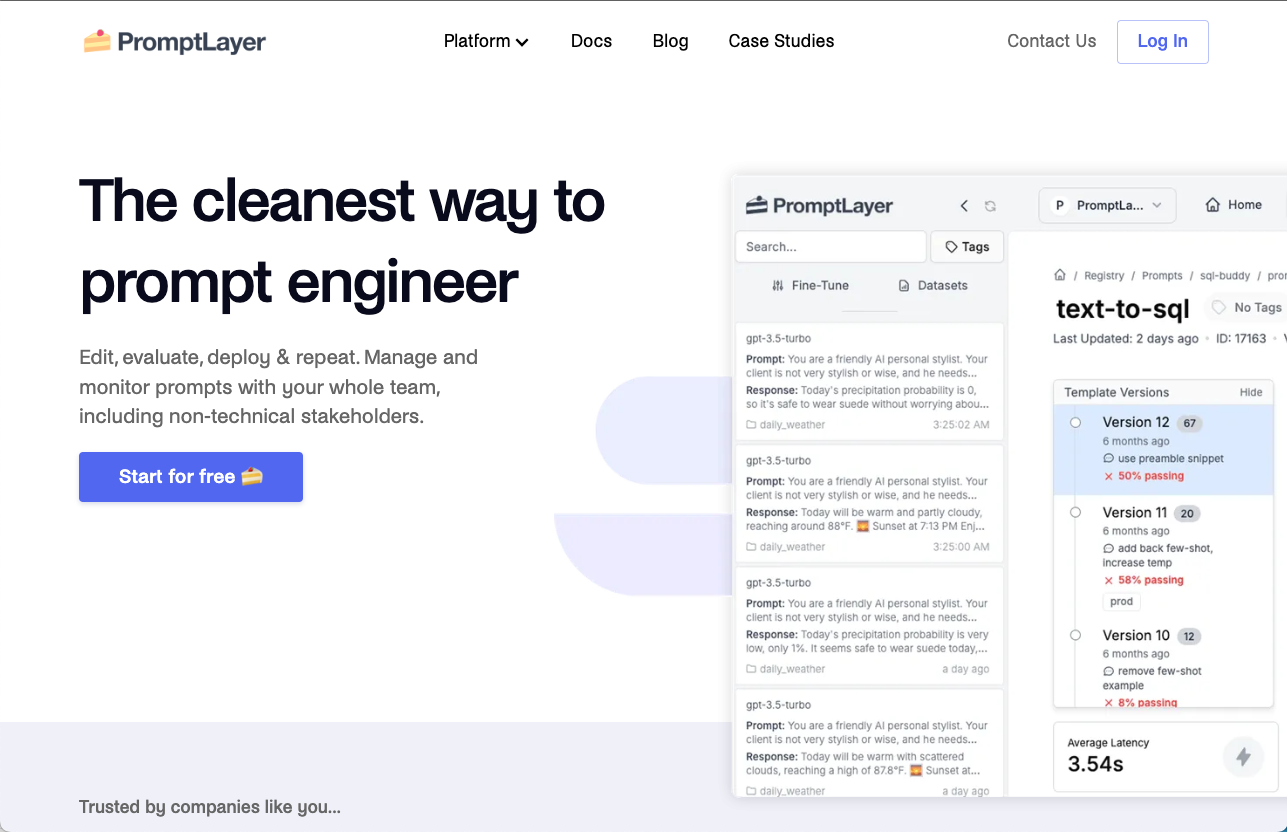
Designed for prompt management, collaboration, and evaluation.
Services:
- Visual Prompt Management: A user friendly interface to write, organize, and improve prompts.
- Version Control: Edit and deploy prompt versions visually, with no coding required.
- Testing and Evaluation: Run A/B tests to compare models, evaluate performance, and score results against your own datasets.
- Usage Monitoring: Monitor usage statistics, understand latency trends, and manage execution logs.
- Team Collaboration: Lets non-technical team members work directly with engineering.
Pros:
- Optimized Experience: Streamlines prompt workflows with robust management tools and interfaces.
- Collaboration-First: Supports shared access and feedback across teams, so domain experts can help evaluate prompts alongside engineers.
- Versatile Integrations: Works with most popular LLM providers and frameworks.
Cons:
- Niche Specialization: May be less useful for generalists outside the prompt engineering and evaluation niche.
2) Azure PromptFlow
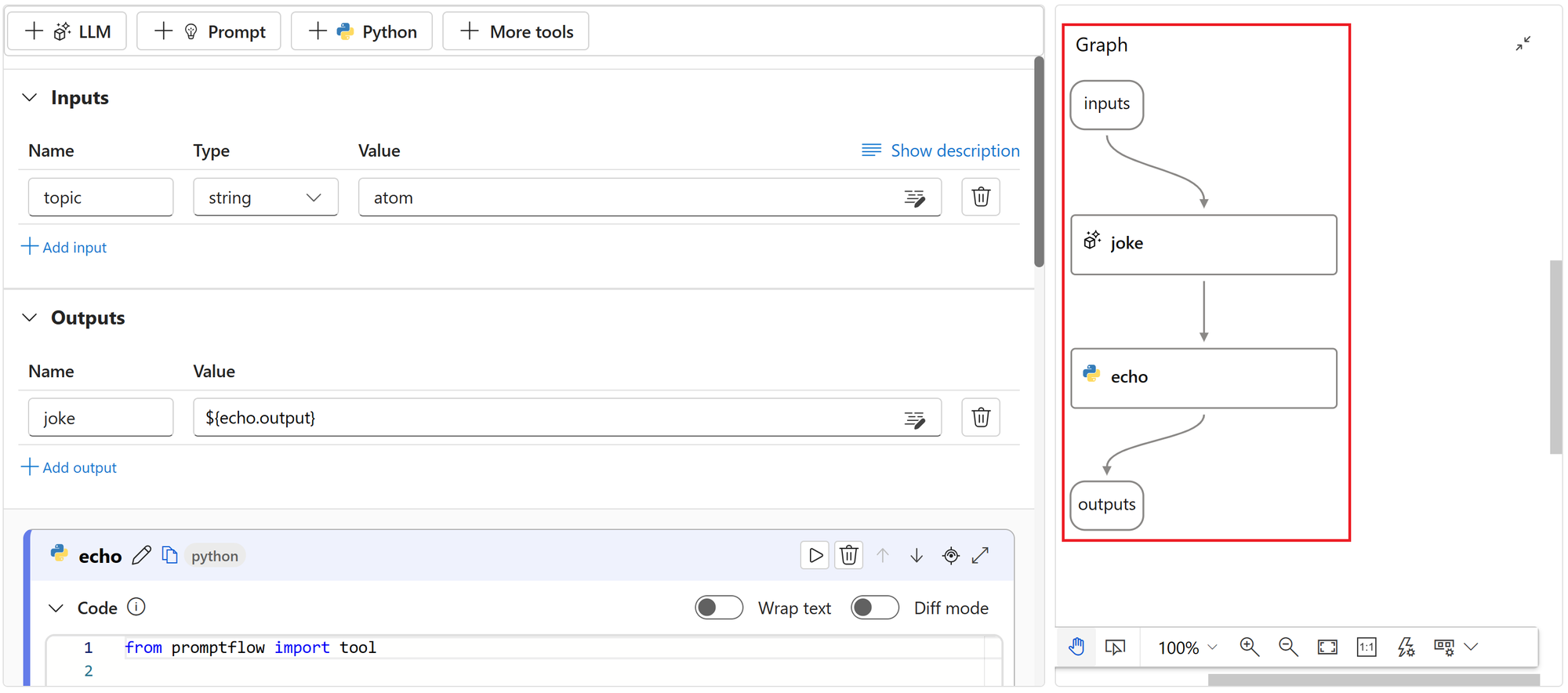
Designed to test, analyze, and update prompts inside Microsoft Foundry, the platform formerly known as Azure AI Foundry.
Services:
- Prompt Management: Organize and manage prompts.
- Analytics: Offers metrics and visualization of prompt performance.
- Collaboration: Multi-user collaboration for prompt management.
- Version Control: Tracks and manages different prompt versions.
- Deployment Support: Allows deployment into production environments.
Pros:
- Comprehensive: Offers a range of services to manage, test, and optimize prompts.
- Azure Integrated: Tight integration with the Azure ecosystem.
- Collaboration: Supports multiple users working together.
Cons:
- Being Retired: Microsoft has begun deprecating prompt flow and plans to retire it on April 20, 2027, pointing users to the Microsoft Agent Framework instead, so it is a risky long-term bet.
- Azure-Dependent: Requires users to work within Microsoft's cloud ecosystem.
- Complexity: Has a steep learning curve for people unfamiliar with Azure.
3) LangSmith
Designed to build, test, and monitor LLM applications. If you are weighing it against other platforms, our guide to LangSmith alternatives compares it with PromptLayer in detail.
Services:
- LLM Monitoring: Track the performance of LLMs across applications.
- Debugging: Inspect the chain of calls to identify errors.
- Testing and Evaluation: Run tests on LLMs to assess performance.
- Cost Tracking: Monitor and manage costs.
- Framework Support: Integrates natively with LangChain and LangGraph, and supports other frameworks through OpenTelemetry.
Pros:
- End-to-End Solution: Take applications from prototype to production.
- Evaluation Capabilities: Extensive testing and evaluation across a variety of datasets.
- Debugging: Traces the flow of information to make errors easy to spot.
Cons:
- Ecosystem Gravity: Framework-agnostic through OpenTelemetry, but its deepest features assume the LangChain and LangGraph stack.
- Pricing: Higher costs compared with some other prompt engineering tools.
- Enterprise Scalability: Can suit smaller teams better than very large organizations.
4) OpenAI Playground
Designed to test and customize prompts with OpenAI's models.
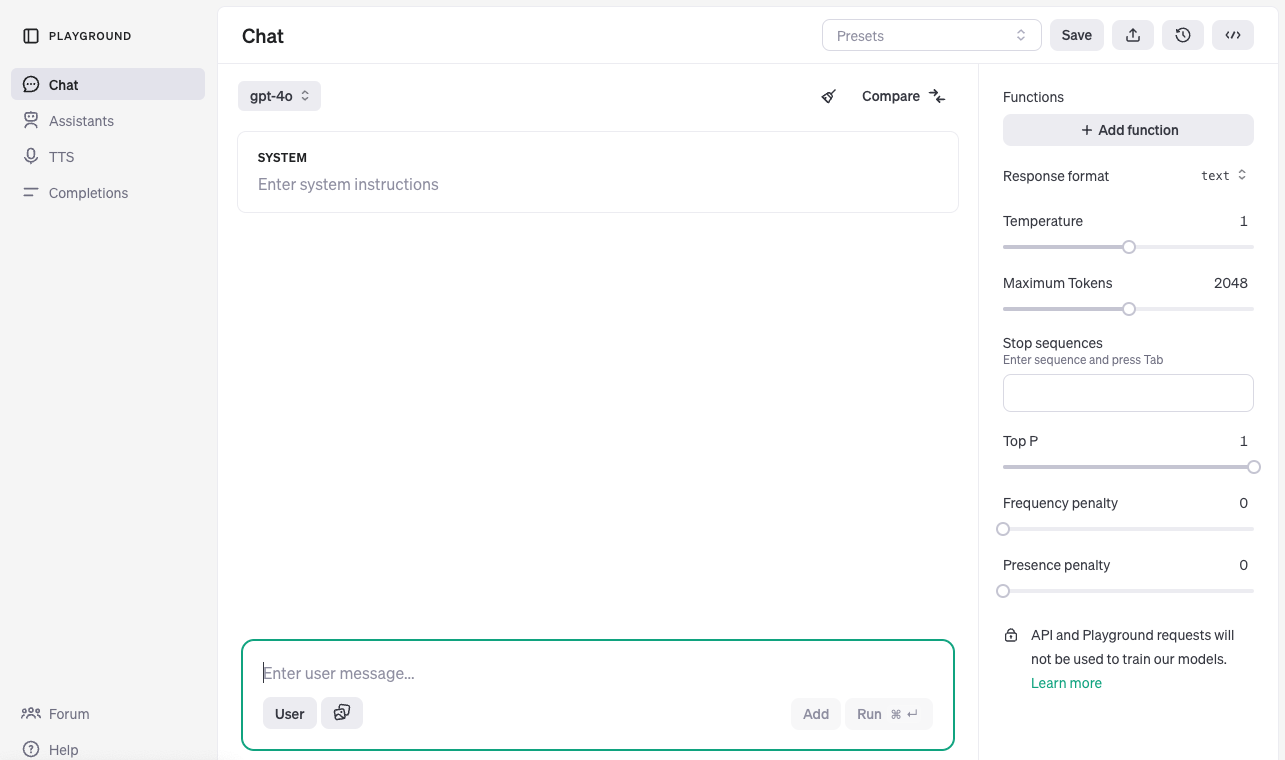
Services:
- Build Prompts: Create and modify prompts with real-time responses across different models.
- Parameter Adjustment: Customize settings like temperature, maximum tokens, and model selection.
- Prompt Templates: Offers example prompts and reusable presets.
- API Integration: Connects to OpenAI's API so you can test prompts before deploying to applications.
- Compare Prompts: Test prompts side by side to analyze differences, a lightweight version of the A/B testing you would run inside a dedicated evaluation tool.
Pros:
- User-Friendly: Accessible for beginners and experts alike.
- Customization: Parameter settings allow detailed control.
- Model Choice: Access to OpenAI's current model lineup.
Cons:
- Limited Features: Lacks comprehensive management and evaluation analytics.
- Dependency: Available only within OpenAI's infrastructure and models.
- Learning Curve: Complex parameter options can take time to understand.
5) Langfuse
Built to monitor, analyze, and optimize LLM applications. For a side-by-side view, see our Langfuse vs LangChain vs PromptLayer comparison.
Services:
- LLM Monitoring: Track the performance of LLMs across applications.
- Prompt Analytics: Detailed metrics and visualizations of prompt performance.
- Error Logging: Log errors or unexpected outputs.
- Cost Tracking: Monitor and manage costs.
- Custom Dashboards: Personalized dashboards with KPIs and project-specific metrics.
- Security and Compliance: A secure environment that adheres to safety standards.
Pros:
- Open Source: MIT-licensed and free to self-host on your own infrastructure.
- Detailed Analytics: Robust analytics and visualization options.
- Customizable Dashboards: Build dashboards for your specific needs.
Cons:
- Learning Curve: The breadth of features can overwhelm new users.
- Self-Host Overhead: Self-hosting is free to license but carries infrastructure and DevOps cost; the managed cloud has paid tiers.
- Complexity for Small-Scale: Can be more than smaller AI projects need.
Select the right prompt engineering tool
Your choice comes down to who owns evaluation and which cloud or framework you already run. PromptLayer fits mixed teams of engineers and domain experts, LangSmith fits LangChain-heavy stacks, Azure PromptFlow fits Microsoft shops that accept its 2027 retirement timeline, and Langfuse fits teams that want to self-host. If versioning is your priority, our roundup of the best tools for prompt versioning is a useful companion read.
Frequently asked questions
What is a prompt evaluation tool?
A prompt evaluation tool lets you test a prompt against sample inputs, score the outputs, and compare versions or models before shipping to production. It turns prompt engineering from guesswork into a measurable, repeatable process. For a deeper primer, see what prompt evaluations are.
Which prompt engineering tool is best for non-technical teams?
PromptLayer is built so non-technical stakeholders can write, version, and evaluate prompts alongside engineers, without touching code. The OpenAI Playground is also approachable for quick experiments, though it lacks structured evaluation and management features.
Do I need a dedicated tool to evaluate prompts?
For a one-off test, a playground is enough. Once prompts reach production and change often, a dedicated evaluation tool pays off by tracking versions, running repeatable tests, and catching regressions. See our guide on how to evaluate LLM prompts beyond simple use cases.
About PromptLayer
PromptLayer is a prompt management system that helps you iterate on prompts faster, speeding up the development cycle. Use its prompt CMS to update a prompt, run evaluations, and deploy to production in minutes. Explore the PromptLayer platform to get started.